Introduction
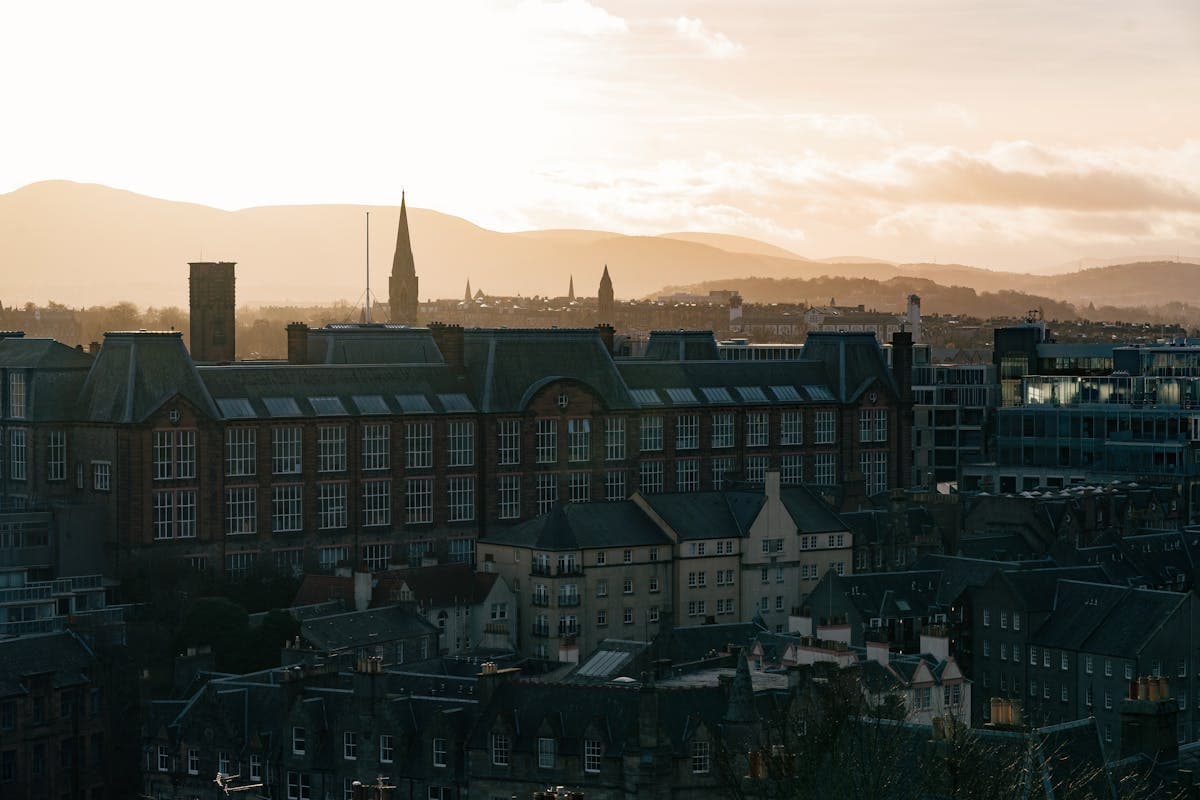
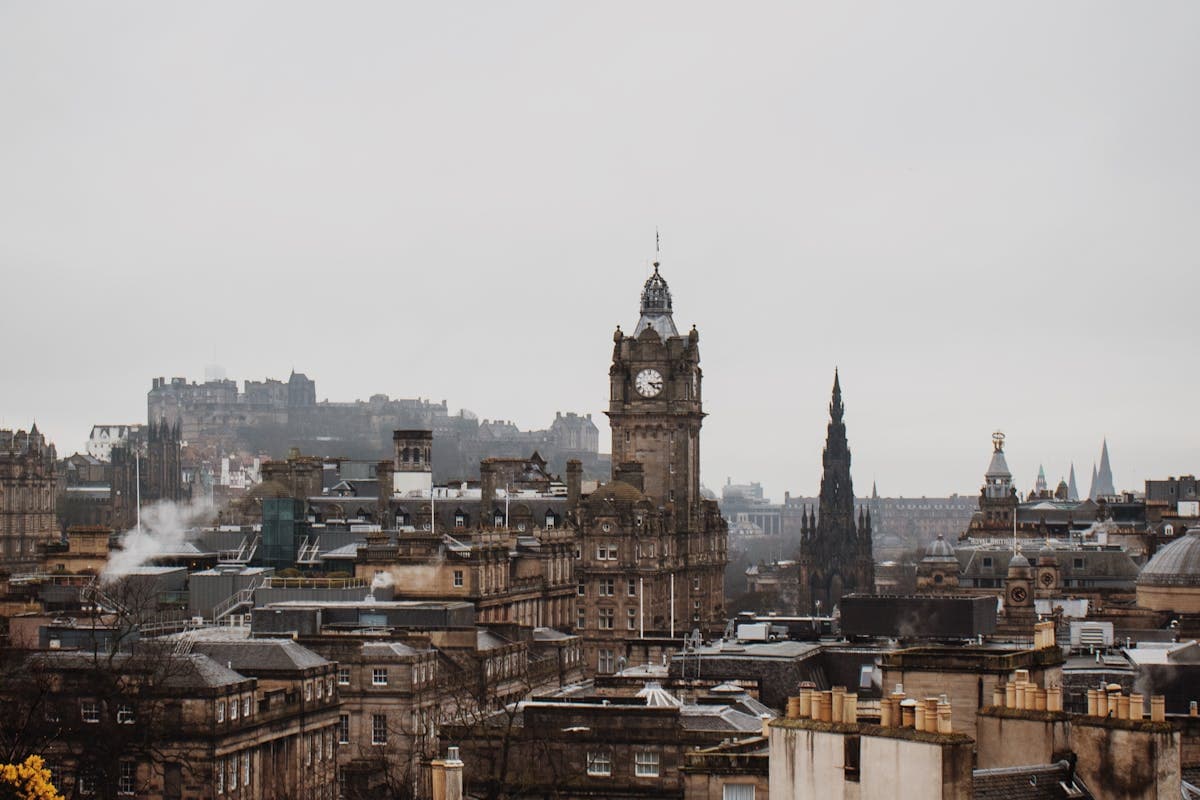
Edinburgh is easier to love than most cities and harder to leave. It has the bones of a medieval city, the volcanic crag, the castle, the Royal Mile running downhill to Holyrood, and layered on top of those bones it has one of the UK's best contemporary food and drink scenes, a genuine arts culture, and a physical setting that is, frankly, unfair. Most cities have to work harder for their drama. Edinburgh gets it from geology.
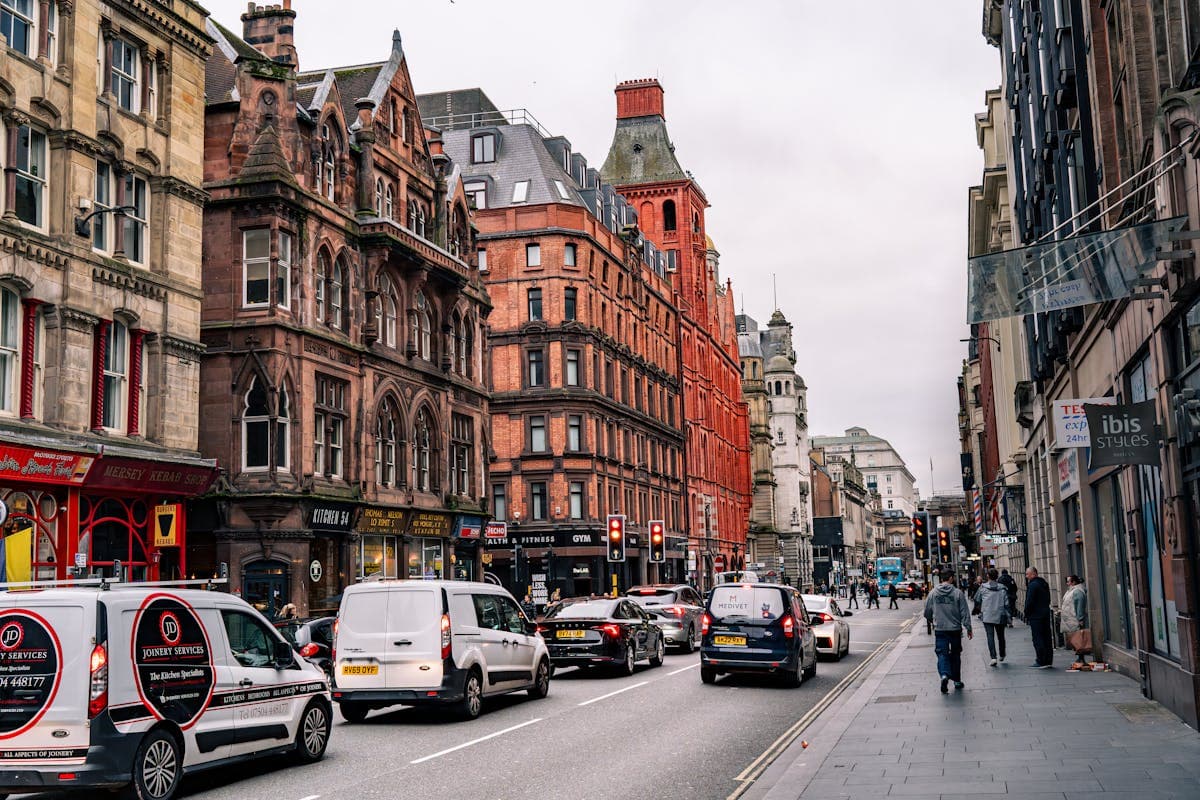
The city divides clearly into the Old Town (medieval, dense, built along the ridge of the volcanic rock) and the New Town (Georgian, wide streets and grand squares, built from the late 18th century as the population expanded northward). Both are extraordinary in different ways. Leith, the port district to the north, has become the city's restaurant heartland.
Edinburgh is smaller than it looks on a map, the centre is very walkable and most of the key places are within half an hour's walk of each other.
Getting There
Edinburgh Airport (EDI) is 8 miles west of the city. The Airlink 100 bus runs to the city centre in about 30 minutes. Trams also connect the airport to the city centre (Princes Street end, about 35 minutes). Taxis are £25–£35.
By train, Edinburgh Waverley station sits in the heart of the Old Town. London King's Cross to Edinburgh is 4.5 hours on the fastest LNER service. Glasgow is 50 minutes.
Getting There Around
Edinburgh's centre is best navigated on foot. The Lothian Buses network is excellent and covers the full city. The Edinburgh Trams line runs east–west along Princes Street and out to the airport.
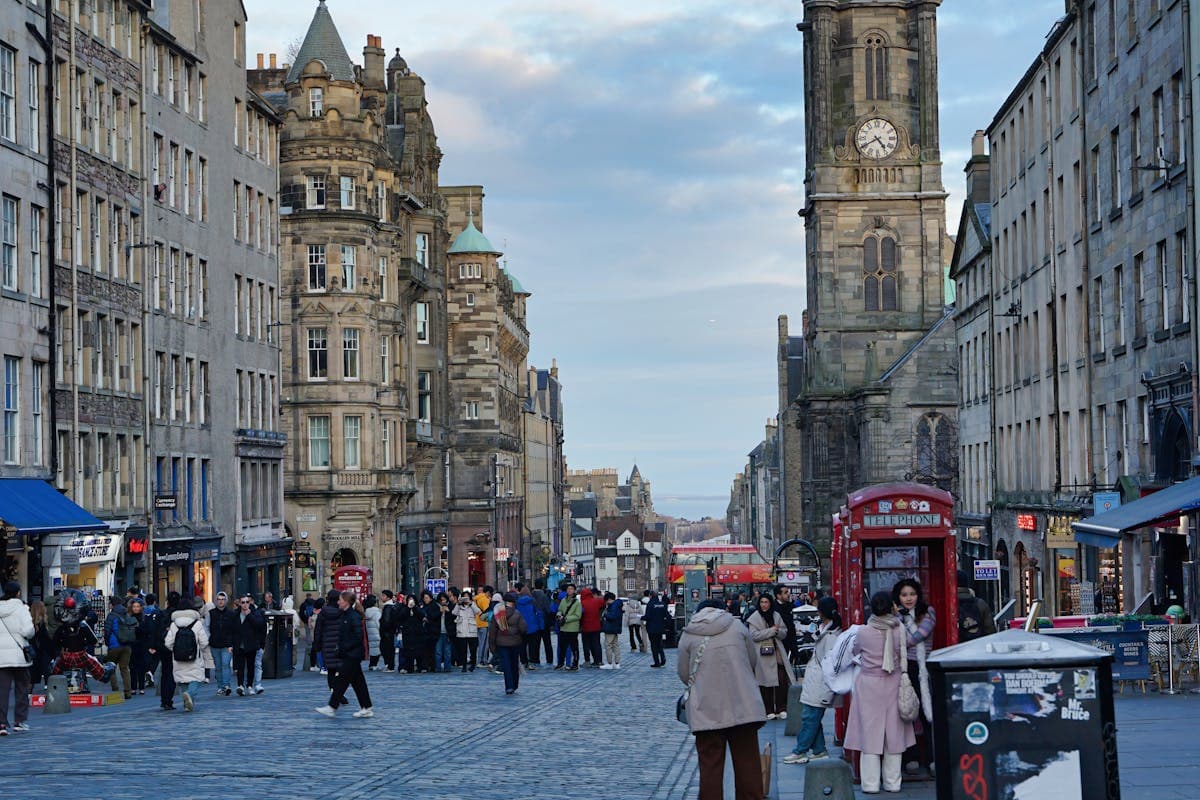
Walking is genuinely the best way to experience the Old Town, the closes, wynds, and steep staircases that connect the different levels of the Royal Mile reward slower movement.
Neighbourhoods to Know
Old Town is the historic heart, the Royal Mile, Grassmarket, Cowgate, Victoria Street. Medieval architecture, closes (narrow alleyways) leading off the main streets, and an intense concentration of history and character. Busy in tourist season, atmospheric year-round.
New Town is the Georgian quarter north of Princes Street, wide, elegant streets, the Georgian townhouses of Moray Place and Charlotte Square. Quieter than the Old Town, good independent shops and restaurants.
Leith is the port district to the north, significantly more relaxed, the best restaurant concentration in the city (The Kitchin, The Shore, Heron), and the Water of Leith walkway connecting it back to the city. Worth a half-day at minimum.
Stockbridge sits between the New Town and Leith, a village-like neighbourhood with excellent independent shops, the Sunday market, and the Water of Leith walkway through the Dean Village.
Bruntsfield and Morningside are the southern residential neighbourhoods, calmer and increasingly interesting for their independent food and coffee scene.
When to Visit
August brings the Fringe, extraordinary but expensive and extremely crowded. Accommodation costs double; the Old Town becomes near-impassable on weekend evenings. If you want the Fringe, accept the conditions and book months ahead.
April and May offer the best quiet-to-pleasant-weather ratio. September and October are the local favourite: the Fringe has gone, autumn light is beautiful on the stone, and the city returns to itself.
December has Hogmanay (New Year), one of the best New Year celebrations in Europe, but similarly extreme for accommodation and crowds.
Practical Notes
- The Old Town is very hilly, comfortable footwear is not optional.
- Arthur's Seat is free and one of the best things you can do, don't skip it.
- Edinburgh's restaurant scene is exceptional but popular spots book out fast.
- The Fringe is in August, plan accordingly whether you're coming for it or avoiding it.
- Edinburgh is more compact than London or Manchester, you can see a great deal without spending much on transport.